


- This topic has 10 replies, 3 voices, and was last updated 9 years, 6 months ago by
Bartolomei Mirco.
-
AuthorPosts
-
20 April 2017 at 12:54 #9686
Goodmorning everyone.
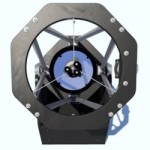
I report this self-construction
http://fabiomarioni.blogspot.co.za/
I don't know if it's already known but it seems interesting to me, especially the way in which the glass disc was prepared.
I made a post about Northek today, It's outside the box but I hope it might be of interest, I am convinced that we have all put up with the stupidity of the builders regarding what is covered in the tread.
http://www.northek.it/forum2/index.cfm?page=topic&topicID=897I'm not sure if I posted on the right page, I haven't quite grasped the layout of the forum yet.
Let me know.
Cool20 April 2017 at 16:52 #9687Hello Franco, we knew Fabio Marioni's creation, we talked about it in some posts, I don't remember exactly where…
Certainly honor and credit to courage and resourcefulness, a job “titanic” that though , according to the author, has led to numerous optical quality issues being addressed ( as can be seen from the Ronchi test ) not completely resolved.
Personally I don't want to go into the details of the process, it is clear that such a project with these methods leads to having to accept numerous compromises, therefore, since it is a self-building adventure, I prefer to highlight the audacity and passion necessary to be able to even think about undertaking such an adventure… then unfortunately, some limits cannot be overcome with courage and commitment alone.However, I still have to finish reading your creation and I want to do so with due calm given the wealth of details and particulars, as always, accompany your very interesting publications.
20 April 2017 at 17:36 #9688Hi Massimo, I was almost certain that an undertaking of that magnitude had not been missed.
I did a search on the forum and found nothing, I probably used the wrong terms, I got into the topic from the beginning. I fully agree with the assessment that such a large amount of work is personal and should be framed as such, what interests me is to talk about the idea of bending the glass disk to make emptying easier and which results in a round support. What escapes me are the complications, if there are any. I think so, I would also suggest that you simplify your polishing and parabolic work as a neophyte, which implies problems both in the processing and in the cell where it must then be located or I'm wrong?
Just something that left me very perplexed, probably because it is never missing here, a gust of wind while standing at the eyepiece at the top of the ladder would have dramatic consequences.Thank you, take all the time you need, The fact that you are interested is already a source of satisfaction for me. If necessary, do not hesitate to ask questions, it is always a pleasure to discuss the technical aspects. I haven't published any drawings because it seems like a job a little beyond normal DIY work, However, I am available to help anyone who wants to try their hand at it.
26 April 2017 at 23:36 #9695Hello Franco, You didn't get the terms wrong but it's our search form on the forum that hasn't been working well lately, as soon as I have some’ I've been trying to understand what happened for a while.
Regarding the complications on the glass “folded” to meniscus, I think they are more into the melting/softening than the actual processing, but Mirco can be much more precise on this, precisely in this period, is conducting an interesting experimentation on shapes and structures “alternative” for the primary glass, obtained through fusion.
I read your publication, what to say… a high level of quality, precision and competence certainly superior to the “normal” amateur self-builder, here we are well beyond “do-it-yourself”, where ( of limits ) I could intervene with more knowledge of the facts , for more technical comments/questions it is better to wait for someone more knowledgeable than me

So from me, congratulations not only for the excellent work but also for the quality of the photos and the detailed description of the entire project .
27 April 2017 at 23:36 #9697Hello Franco,

Your workmanship is really very beautiful and with attention to detail... I'll have to look at it more carefully as soon as I have some time...
Yes, I had also seen Fabio Marioni's work, even though I have serious doubts, on the optical quality that mirror may have, not so much for the accuracy that he may or may not have managed to achieve in polishing and parabolization, but precisely due to the distortions due to the weight of the glass blank, so up in relation to the diameter.
To support this I'll show you a couple of calculations I did:In the first place, I have to say that the position of the support points does not seem to follow any type of optimization. To get an idea, I topped the photo of the telescope cell, the position of 18 support points suggested by Gui Plop and the difference that can be seen is notable (although Gui Plop is not optimized for meniscus mirrors, the solution it provides can still be considered good in first approximation).
Having said that, I carried out simulations with a finite element program to calculate the deflection due solely to the self-weight of the glass, when placed on his cell. In the image you can see the deformation of the blank with the cell proposed by Fabio (the deformations are obviously exaggerated for better visual understanding). Even fitting the data with the best parabola, there appears to be a P-V error on the upper surface (excluding the central portion of 350mm in diameter, obscured by the secondary) approximately 135 nm or Lambda/2 !!!!!!!!!!! So even if he managed to work and get a perfect mirror, the deflection due to the glass's own weight would compromise everything.
The figure below instead refers to the result obtained with a better support cell (the one in red in the first image).
In this case the P-V is equal to approximately 70nm, i.e. Lambda/4. Still too large for the tight optical tolerances needed in these applications. The cell + blank stiffness system should not significantly influence the optical quality of a telescope, and certainly not induce deformations of the same order of magnitude as the maximum tolerance allowed in a mirror.Aside from these considerations, I find the work done by Fabio very interesting and it is to be appreciated for the passion and tenacity used in facing such a challenge. Obviously you can do all the calculations and simulations you want, but it is always the eye placed through the eyepiece that gives the final judgment to the work carried out. And I didn't put it there, so I can't judge further...
To answer your question, NO, There are no particular complications in making the cell for a meniscus mirror. In fact the various support triangles in a normal cell, they must be floating, precisely to be able to adapt to the lower surface of the blank. If this is curved, they will arrange themselves so as to lean on this curvature. Maybe some small adjustments can be made, but nothing that complicates the job.
The meniscus curvature of a glass disk is not particularly difficult, all you need is a convex mold and an oven capable of reaching at least i 600 °C. At these temperatures (even a little lower 500-550 °C) the glass disk begins to relax and rest on the underlying mold. Great attention must then be paid to the cooling curve which must be adequately slow to avoid the onset of internal tensions in the glass.
In conclusion, to meniscus or not, the glass must always be adequately thick so as not to deform excessively under its own weight, otherwise there is no trick that matters (active optics excluded).In the last few months I have done several tests, both in glass fusion and by softening, and despite many failures, I finally managed to get this:
https://www.grattavetro.it/wp-content/uploads/2017/04/Blank-1.jpg
https://www.grattavetro.it/wp-content/uploads/2017/04/Blank-3.jpgAs you can see the upper surface is made up of a 420mm diameter and 10mm thick already curved disc (meniscus type), on the back of which however they were attacked, for softening, a whole series of ribs to give adequate rigidity.
Now I "just" have to see if I can work it and if it keeps its shape over time...
Soon I hope to be able to post some more details...see you soon...Hello 30 April 2017 at 9:32 #9701Boys' Day.
Maximum, regarding the mirror I read Mirco's post with interest while for the easel I am sure that no specific ability is needed to evaluate the proposed solution and any question can make me see what I haven't seen. The post is much scaled down compared to that
which I wanted but it seems to me that since the object is a little off topic I only risked boring and I have
favorite one “Tale” more for images than for drawings.
I don't know if it's a common problem I've tried to solve or if it's just one of mine “fixation”.
Thanks Mirco, Going back to the mirror it seems to me that the problems of the subject in particular are many but this goes beyond the discussion, I would say that we all recognize the scope of Fabio's work and I absolutely do not intend to question his project, then I don't know who was able to look inside and make assessments. I stick to what he described and I have no reason to doubt it in the end the vision is very forgiving and the collection of light makes the difference.
Regarding the cell, however, I was not referring to the construction but precisely to the design and processing of the same in that direction. What I thought was that if the thickness-to-diameter ratio is so critical, why not design a cell that lets the mirror deform under its own weight and keeps it deformed?, if worked in the cell this will automatically be corrected.
It remains to be seen how much it is possible to maintain this deformation with the change in inclination.You're doing a great job, congratulations, curiosity drives me and although I wouldn't want to ask you to spoil anything, I can't resist: you already have enough data for an empirical minimum diameter/thickness curve?
A thickness-diameter-temperature relationship would then be interesting.
Also, referring to the two images, a weight saving curve between shim disc and ribbed disc.
I better stop.Thanks
Cool2 May 2017 at 0:15 #9726Hello Franco,
then, working a mirror already above his cell is not a bad idea, especially if the blank is very thin in relation to the diameter (I'm working on mine too now, already above his cell), but obviously there are limitations. Working the mirror above the cell helps, but it cannot compensate for everything.
In the sense that, if the mirror is so weak (or too fine) to deform a lot (I mean tens of nanometers) just due to its weight, it will deform even more, on the area being processed, due to the weight of the tool.
This means that at that point, the glass bends, is worked, and then when the tool pressure fails, it rises again due to elasticity. Even in this way it is not possible to obtain a good figure. To try to minimize this effect, very little pressure can be exerted on the tool, conversely significantly extending processing times.
However, the problem remains that even if you manage to obtain a perfect figure with the mirror pointed at the zenith, the same correction cannot be obtained by varying the inclination of the telescope, since the normal component to the mirror changes, of the acceleration of gravity.
This is to say that it is NOT necessarily essential to start from a perfectly rigid and non-deformable blank (although the closer you get the better), but it must at least possess enough rigidity to deform by a few nanometers (a maximum of ten. Or maximum 4.2 nm of RMS as suggested by the GuiPlop manual) when placed above its cell and placed horizontally.P.S: if the blank is too thin and the deformations are too high, no one forbids you to create a cell with a higher number of points. The higher? Well, until the number of points is able to keep the deformations within tolerances, even if this involves an increase in complexity in its implementation.
I am sorry, has no, at the moment I do not have enough data to draw an empirical minimum diameter/thickness curve, even though I had found some on the internet. One of them is here: https://people.eecs.berkeley.edu/~jonah/18plus/
but I had also found others, I just don't remember where now.As for weight savings, thus head and shoulders between my ribbed solution and a monolithic one with equal rigidity, there is a weight saving of approximately 40-50%, even if the weight saving is not the factor that makes the difference. It makes the difference, the high area-volume ratio which allows this type of blank to reach temperature quickly and to follow air temperature variations much better.
See you soon…ciao…
2 May 2017 at 2:22 #9728This means that at that point, the glass bends, is worked, and then when the tool pressure fails, it rises again due to elasticity. Even in this way it is not possible to obtain a good figure. To try to minimize this effect, very little pressure can be exerted on the tool, conversely significantly extending processing times.
This is true Mirco, but it is equally true for all mirrors and in my opinion it is not so decisive as to prevent the generation of a good figure, I'll explain:
A deformation, maybe infinitesimal, It also happens for thicker mirrors. We cannot know how much the amount of deformation is under the weight of the tool without carrying out measurements during the machining strokes or simulations., but even in that case we do not have a certain limit for the deformations beyond which the processing does not produce the desired results.
The only certain data we have ( so to speak
 ), is the variation of the surface before and after the machining session.
I mean that the effect of the processing on the surface will always be the combined result of multiple actions: that of the applied technique, of the temperature variation, operator errors, etc… to which we also add the hypothetical one of surface deformation due to the weight of the tool, but in any case our evaluations will always refer to the mirror in position “rest”, moment in which we will carry out the measurements and in which all these components cease to carry out their action.It means that the good “grattavetro” will have to keep in mind that, if the technique produces a result different from expectations, once the components relating to an incorrect setup have been verified and excluded, there could also be a component of surface deformation due to weight that alters the effectiveness of the technique itself, and therefore ( always the poor good glass-scratcher ) will have to implement the countermeasures by studying the error produced by the tool/technique ( this time regardless of the cause ) and evaluating any changes to the tool/technique for “absorb” the unwanted error and obtain the desired surface variation with the mirror in position “rest” in his cell.
Then it is clear that there is no guarantee that the mirror will not deform further as the inclination varies, if it is too thin there is little that can be done, they are needed as you say, other solutions.
2 May 2017 at 12:23 #9729And and, Sure Massimo, I didn't mean to say that it's impossible to get a good figure, I meant it's much more complicated, I said that badly, Excuse me…
I agree when you say that “the only certain data we have, is the variation of the surface before and after the machining session” and that this is due to the combined action between the type of pass and the deformation of the mirror, and it is clear that the less influential the effect of the deformation is, the more understandable the effects of the passes used are.
For example, if I use passes 1/3 COC and I have a mirror that warps a lot, in the end I continually find myself with a raised edge (or retorted), instead of a sphere, which I can't give a reason for, so maybe I attribute the result to the pitch not being well adapted, at the wrong pressure etc…Then it is obvious that with the necessary precautions good results can still be obtained.
What has been said up to now refers to a very extreme case, in which the deformations of the self-weight alone are very high, and well outside of what are the usual cases, this is why I started from the experiment conducted by Fabio, not so much to talk about his work, but to speak in general about such extreme cases.Anyway, as we agree, good corrections can be achieved, the insurmountable problem remains due to the variation in inclination of the telescope.
Is. If the edge bends 100nm (deliberately exaggerated value) when the telescope is aimed at the zenith, and you can work on it until you bring it into tolerance, then when I bring it vertically all those 100nm will rise again due to the elastic effect, the mirror normal component of the gravitational acceleration having disappeared.This is to say, that beyond a certain point the thickness of the glass cannot be reduced, otherwise there is no trick that matters, unless you are satisfied with an optical correction which can vary greatly depending on the inclination of the telescope. Or a cell with many more support points is adopted.
P.S: Is’ however, it should be kept in mind that we have not considered the deformation due to the component parallel to the surface which also varies with the inclination, which combines its effects with those due to the normal component, however, as a first approximation, these effects are considered to be less intense than the others.
6 May 2017 at 21:33 #9747Youth evening, I'm still mulling over what you wrote.
Some considerations ” it escapes me “, perhaps always thinking about 40” we let ourselves be influenced.
Let's put it this way, with your experience as a grater you should be able to draw a line that defines the convenience of using the system of folding the blank while maintaining a thickness that does not fall into the above problems. Obviously referring not to extreme diameters.
Then: thickness, saving emptying time and economic convenience. In relation to the different diameters.
Another doubt that bounces around in my head is about the ribs, regardless of the thickness of the mirror, I have the impression that a lot of tension problems are created during acclimatization by moving the mirror as if it were not of uniform thickness and that they are not resolved even once at temperature.
Mine is just an intuitive assessment not supported by any data, I'm missing something ???
Thanks.
Cool.11 May 2017 at 14:42 #9760Hello Franco,
I honestly couldn't draw a guideline as you ask, also because my experience as a glass scraper is limited and always in an amateur dress, therefore I certainly cannot evaluate the economic convenience given that all the working hours are free (being a hobby), at most I can save on the cost of abrasives (but the big ones also cost little).
Bend a glass blank, Yes, it certainly saves you hours of work, but it's not very easy to do, in the sense that you then have to be very careful with the temperature curves, otherwise internal tensions etc. will be generated, so from an amateur point of view it is not the easiest path to take, also why have an entire oven made available just for you 1-2 days has its cost.Regarding tensions in a ribbed mirror, no it's not true that they are a problem. Any object, in the shape you prefer, if made of homogeneous and isotropic material, has no internal tension during expansion or contraction unless:
1) there are temperature gradients internal to the object. But these, even if they appear during the transient, they would disappear once the temperature stabilizes.
2) the object is rigidly constrained in several points which tend not to allow it to expand or contract freely, but this does not happen if the mirror is simply placed on top of the cradle. -
AuthorPosts



- You must be logged in to reply to this topic.